
The Engineer’s System for Mental Health & Productivity
How to manage stress, protect your brain, and get more done (without burning out).
Software engineering is not just a technical job, it's a cognitive endurance sport. Every day, you’re solving abstract problems, making dozens of decisions, switching contexts constantly, and holding complex systems in your head. Yet most productivity advice still defaults to one idea: “work harder” or “just focus more.” That approach only breaks down quickly because your brain doesn’t scale like a machine. It operates within biological limits, and ignoring those limits leads to diminishing returns. Research in cognitive science shows that sustained focus depletes mental resources like attention and dopamine, decision-making quality declines over time (decision fatigue), and stress hormones impair memory and reasoning. Studies from Stanford University suggest that deep cognitive productivity peaks at around 4–6 hours per day—after that, output doesn’t just plateau, it declines.

The real problem isn’t lack of discipline, it's unmanaged stress. Most engineers aren’t struggling because they’re lazy, but because they overload their days, work without structured breaks, react instead of plan, and treat stress as something to ignore. In reality, stress isn’t the enemy. The concept of eustress shows that controlled stress can actually improve performance when used correctly. The goal isn’t to eliminate stress entirely, but to design it into your system in a way that supports focus, energy, and sustainable productivity.
The Mental System: A Simple Framework That Works
Instead of relying on motivation, build a system that supports your brain.
Here’s a 5-step daily structure grounded in cognitive science.
1. Start With 3 Meaningful Tasks
Your brain performs best with clarity—not overload.
Each morning (or the night before), define:
● 1 Deep Work task (high focus, high value)
● 1 Medium task (moderate effort)
● 1 Quick win (fast completion)
This reduces decision fatigue and gives the start of your day direction.
2. Work in 60–90 Minute Focus Blocks
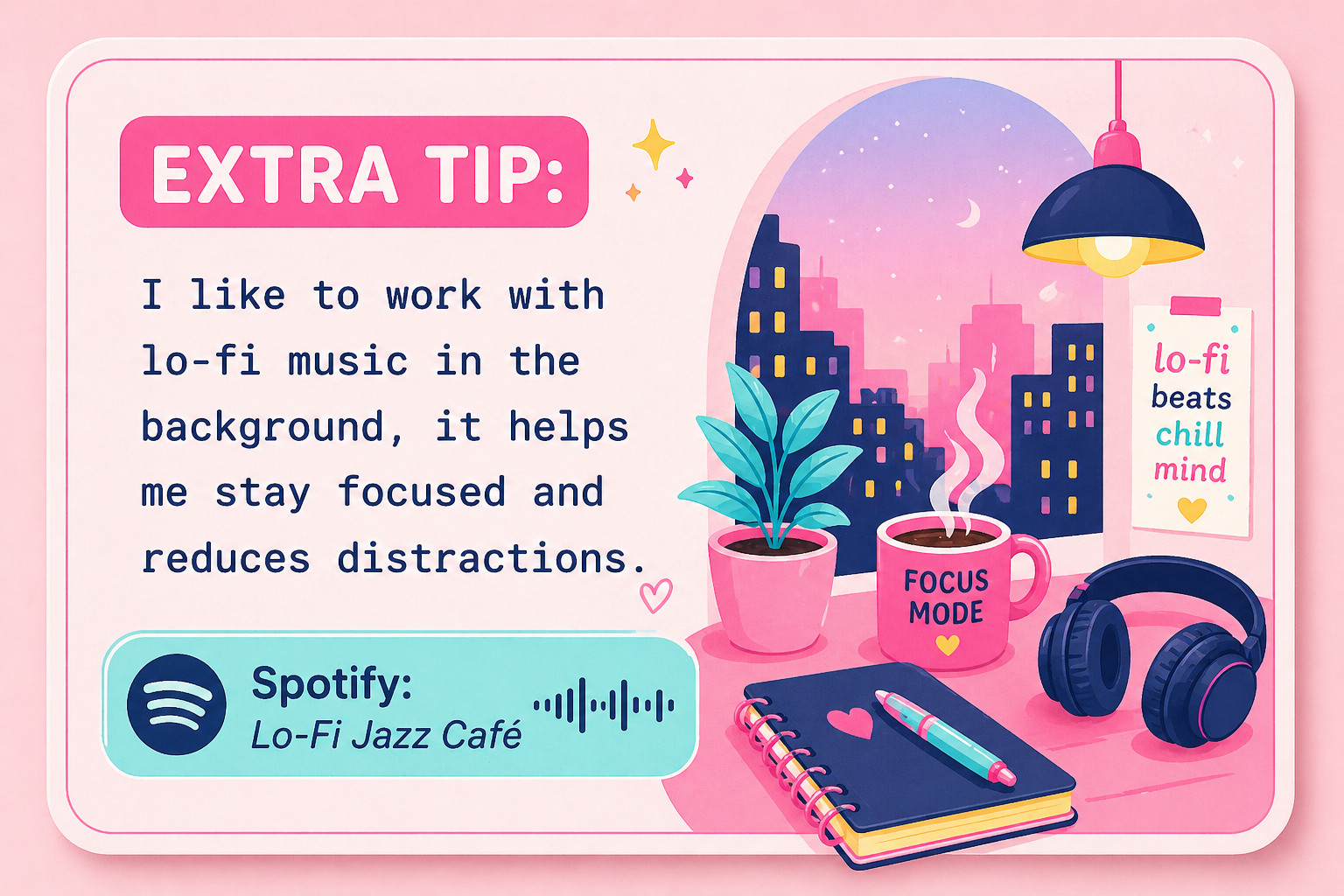
This aligns with your brain’s natural attention cycles.
● 60–90 minutes → deep focus
● 10–15 minutes → recovery
Repeat 2–3 times max.
Inspired by Deep Work, this approach protects your most valuable resource:
attention.
3. Eliminate Hidden Cognitive Load
Distractions aren’t just interruptions—they’re mental tax.
Every notification forces your brain to:
● Context switch
● Rebuild focus
● Reprocess information
Reduce this by:
● Closing unnecessary tabs
● Turning off unecessary notifications
● Batching communication (2–3 times/day)
Focus is not about willpower, it’s about environmental design.
4. Use Stress as a Performance Tool
Instead of avoiding pressure, apply it intentionally.
Try:
● Setting short deadlines (“finish this in 45 minutes”)
● Working in timed sprints
● Tracking visible progress
This activates urgency without overwhelm—leveraging eustress to boost
performance.
5. End Your Day With a System Reset

Most engineers skip this, and pay for it the next day.
Before you log off:
● Write tomorrow’s top 3 tasks
● Clear your workspace
● Mentally “close” your workday
This reduces anxiety and improves next-day focus.
Additional Non-Negotiables
You can’t optimize productivity without supporting your brain.
Sleep:
● 7–9 hours = better memory, focus, and debugging ability
● Sleep deprivation = cognitive impairment
Movement:
● Increases blood flow to the brain
● Boosts mood and energy
Even 20 minutes daily makes a measurable difference.
Key Takeaway
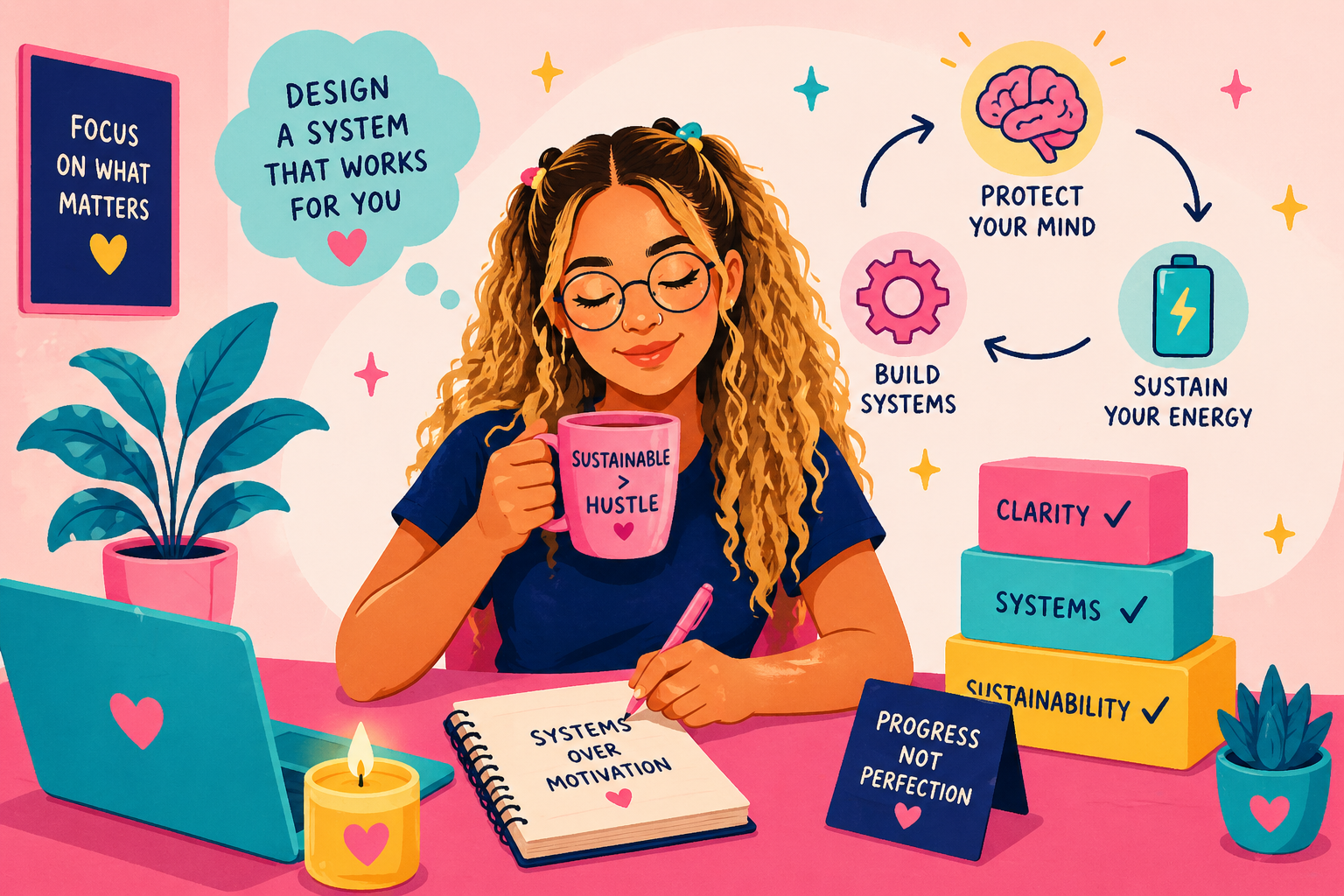
As engineers, we spend so much time optimizing systems, debugging inefficiencies, and improving performance, yet we rarely apply that same mindset to ourselves. Productivity is not about pushing harder or working longer hours, it’s about designing a system that your brain can sustain over time. When you prioritize clarity over intensity, build systems instead of relying on motivation, and focus on sustainability instead of short bursts of output, you create a way of working that not only improves performance but also protects your mental health in the long run.
Further Reading & Inspiration
If you would like to explore further and sharpen your approach, these resources are a great place to start:
● Medium - Framework Thinking & Mental Models
● James Clear - The habits Guide
● Farnam Street - Mental Models: The Best Way to Make Intelligent
Decisions
● Nir and Far - How to Protect Your Focus Without Burning Bridges.
The best engineers don’t just optimize code—they optimize how they work.
Ready to build with a team that values performance, innovation, and sustainable excellence?



-3.png)